An online ordering system for restaurants is no longer just a nice extra. In the U.S. market, it has become one of the most important tools for increasing direct sales, reducing dependency on third-party apps, and giving customers a faster ordering experience. Whether you run a full-service restaurant, a café, a bar, or a takeout-focused business, the ability to accept orders directly through your own digital system can significantly improve both your margins and your customer relationships.
Many restaurant owners first start thinking about online ordering because of delivery apps. Those platforms may seem convenient at first, but they usually come with high commissions, limited control over the customer experience, and very little ownership of your own customer data. A direct online ordering system changes that. Instead of sending customers to a marketplace, you give them a branded ordering experience that belongs entirely to your business.
In this complete guide, you’ll learn what an online ordering system for restaurants actually is, how it works, what features matter most, and how to choose the right solution if you want to increase direct orders without sacrificing simplicity.
What is an online ordering system for restaurants?
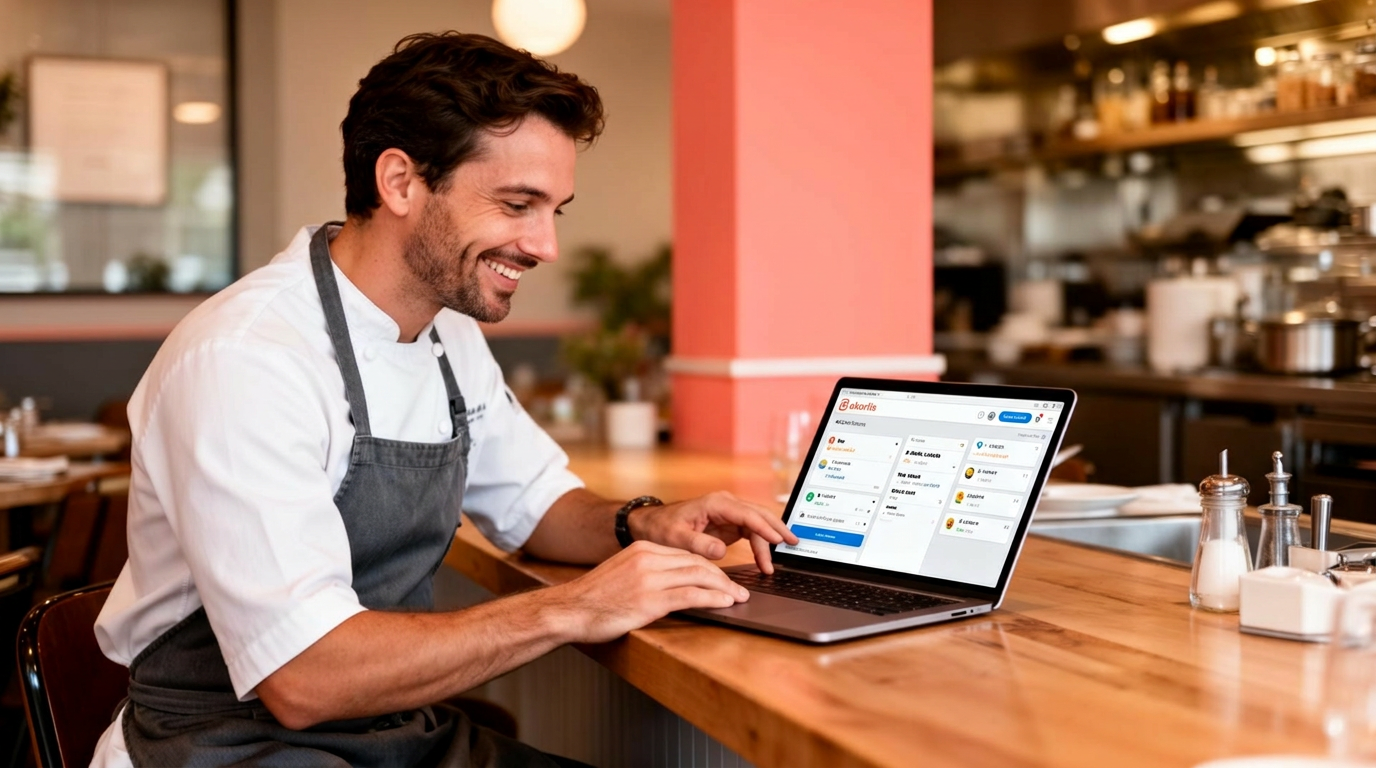
An online ordering system for restaurants is a digital solution that lets customers browse your menu, customize items, place orders, and sometimes pay online without needing to call your staff or rely on a third-party app. In most modern systems, customers can access the menu from a QR code, a direct link, or your website. Once they open it, they can view categories, photos, descriptions, prices, and add-ons before completing their order.
The key difference between a restaurant-owned ordering system and a marketplace app is control. With your own system, you control the branding, the menu structure, the ordering flow, the pricing, and the customer journey. That matters a lot in competitive markets like the United States, where customer expectations are high and restaurant profit margins are already under pressure.
If your restaurant already uses a QR code menu, adding online ordering is a natural next step. Instead of simply showing products, your menu becomes a working sales channel.
How does a restaurant online ordering system work?
Most restaurant online ordering systems follow a very simple workflow. First, you create your menu inside the platform dashboard. You add your categories, products, photos, descriptions, prices, extras, and product variations. Then the system generates a link or a QR code that customers can use to access your menu.
From the customer’s side, the experience is straightforward. They open the menu, browse the items, customize the order, and place it directly from their phone or device. Depending on how your setup works, they can either pay online immediately or submit the order and pay in person. On your side, the order appears in real time in the dashboard, allowing your team to process it quickly.
This process removes friction from ordering. It also reduces miscommunication, which is one of the biggest sources of order errors in restaurants. When customers select their own options, extras, sizes, or notes, the chance of mistakes drops significantly.
Why restaurants in the U.S. are moving to direct ordering
The American market is highly competitive, and restaurant owners are constantly trying to protect margins while improving customer convenience. Third-party delivery apps can help with exposure, but they also eat into profitability. A direct online ordering system gives restaurants a way to keep more of every order while still meeting modern customer expectations.
There are four major reasons why direct ordering is growing so quickly. First, it reduces commission costs. If you’re paying a significant percentage on every order to an outside platform, that money adds up fast over the course of a month. Second, it strengthens your brand. Customers are ordering from your business, not from an app that places your restaurant next to dozens of competitors. Third, it improves the customer experience because you can control the entire flow. Fourth, it gives you access to customer behavior and order insights that help you make smarter business decisions.

Key features to look for in an online ordering system
Not all ordering systems are built the same. Some are little more than a digital menu with an order button. Others are full operational tools designed to support real restaurant workflows. If you’re choosing a platform, focus on features that directly improve performance, usability, and control.
Customizable digital menu: You should be able to organize categories, products, photos, descriptions, and pricing in a way that matches your business model. Customization matters because menus are not one-size-fits-all.
Product variations and extras: This is essential for restaurants in the U.S., where customization is common. Customers expect to add extras, choose sizes, remove ingredients, or leave notes.
Online payments: If you want to reduce friction and speed up service, online payment support is a major advantage. It also improves convenience for takeout and delivery orders.
Table ordering support: For dine-in businesses, customers should be able to scan a QR code at the table and order directly. That creates a faster and more modern service model.
Analytics: A strong system should help you understand what sells, when customers order, and how your menu performs over time. This is where articles like menu analytics become especially relevant.
Brand customization: Your ordering system should not look generic. Colors, fonts, logos, and landing pages should reflect your restaurant’s identity.
Direct ordering vs third-party apps
For many U.S. restaurants, the biggest question is not whether online ordering matters, but whether they should keep relying on third-party apps or move to a direct ordering model. The honest answer is that the two channels can serve different purposes, but your direct system should become the foundation.
Marketplace apps may help with reach, but your direct system helps with profit. That distinction matters. When your customer orders through your own menu, you keep more of the revenue, control the branding, and build a stronger relationship with that customer. You also avoid becoming dependent on platforms that can change fees, algorithms, or visibility rules at any time.
A practical strategy for many restaurants is to use third-party apps for exposure while actively encouraging repeat customers to order directly next time. Your QR menu, your website, and your in-store experience should all point people toward your own ordering channel.
Who should use a restaurant online ordering system?
This type of system is not just for delivery-heavy restaurants. It works for a wide range of hospitality businesses.
Restaurants: Improve direct ordering and reduce order mistakes.
Cafés: Speed up ordering during peak hours and simplify takeout.
Bars: Let customers order more easily from tables or lounge areas.
Hotels: Offer room service or dining access through a digital menu.
Beach bars and seasonal venues: Reduce wait times and serve more guests efficiently.
How to choose the right system for your restaurant
The right platform should balance simplicity and operational depth. If it’s too basic, it won’t support your workflow. If it’s too complex, your staff won’t actually use it effectively. Start by asking a few practical questions: Can customers place direct orders easily? Can I customize the menu? Can I accept payments? Can I support dine-in and takeout from one system? Can I manage everything without technical complexity?
You should also think about long-term scalability. If your business expands to multiple locations, adds more languages, or wants more branding control, the platform should grow with you. Otherwise, you’ll end up migrating later.
Final thoughts
A modern online ordering system for restaurants is more than a convenience tool. It’s a revenue channel, an operational tool, and a better customer experience all in one. In the U.S. market, where convenience and speed matter more than ever, restaurants that own their ordering experience are in a stronger position than those that rely entirely on outside platforms.
If you want to reduce commissions, improve service, and turn your digital menu into a real sales system, a direct ordering solution is the next logical step. You can also explore how it connects with QR code table ordering if you want to improve dine-in service as well.
Ready to move beyond static menus? Check our pricing and start your QR menu today.
Ready to Transform Your Restaurant?
Discover how Akorlis can help you create stunning digital menus that enhance your guests' experience and streamline your operations.
Explore Our Plans